|
The Looe
Valley Line |
|
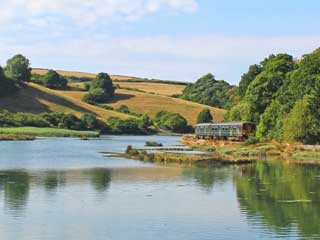
Running
alongside the East Looe
River between Sandplace
and Looe in Cornwall.
The Looe Valley Line, operated by Great Western Railway, runs
between Liskeard and Looe following the much of the East Looe
River valley. It is 8 3/4 miles of one of the most
picturesque railway lines in England.
This line attracts many travellers following
several pursuits. As well as the wonderful scenery, there are
ample opportunities to view wildlife along the route including
many wading birds that feed at low tide on the estuary. The
halts along the line allow discovery of the history of the
railway, the Looe river and the local communities.
Everyone will find something of interest - and there is also a
self-guided 'pub tour' that takes in several hostelries along the valley!
The
loop between Liskeard and Coombe Junction, where the train has
to reverse to carry on to Looe, is explained in the history of
the line.
|
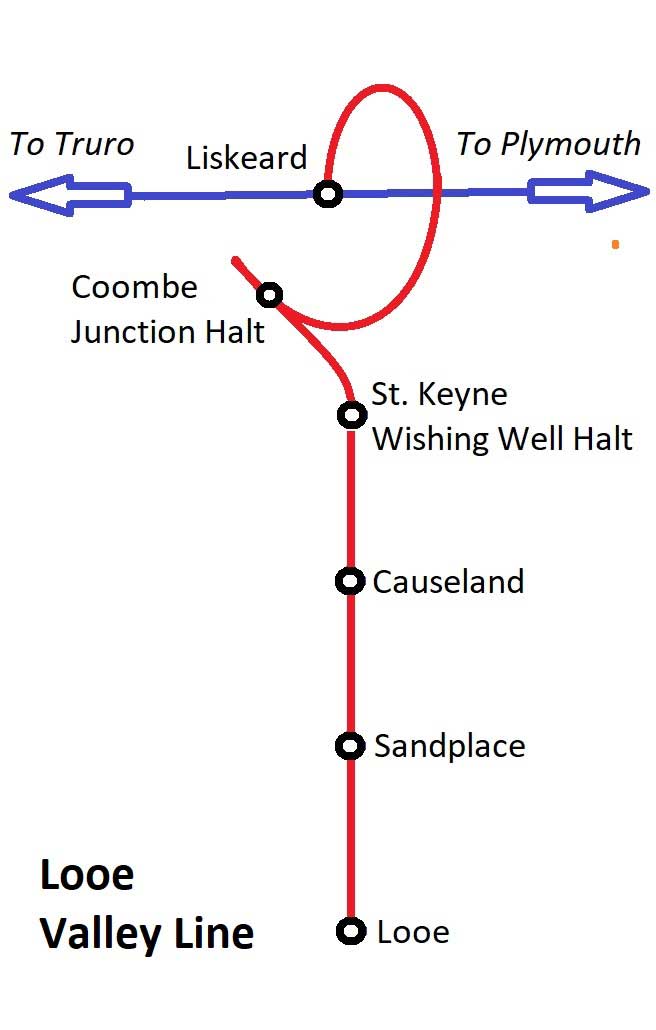
The Route and Halts of the Looe Valley Line
 |
|
|
According to
Wikipedia - the Looe Valley Line was opened as
the Liskeard and Looe Railway on 27 December 1860 from a station
at Moorswater, a little west of Liskeard, to the quayside at
Looe.
Passenger services commenced on 11 September 1879, but the
Moorswater terminus was inconvenient as it was remote from
Liskeard and a long way from the Cornwall Railway station on the
south side of the town. On 15 May 1901 the railway opened a
curving link line from Coombe Junction, a little south of
Moorswater, to the now Great Western Railway station at Liskeard.
The section from Coombe Junction to Moorswater was closed to
passenger traffic on the same day but passenger numbers tripled.
|
The new connecting line had to climb a considerable vertical
interval to reach the Cornish Main Line which passed above
Moorswater on a 147 feet (45m) high viaduct. The Liskeard and
Looe Railway was taken over by the Great Western Railway in 1909
and the attractive seaside resort of Looe became heavily
promoted as a holiday destination in the railway's publicity.
The section beyond Looe station to the quay was closed in 1916.
In 1966 the line was due to be closed under Richard Beeching's
Reshaping of Britain's Railways plan, but was
reprieved just two weeks before its scheduled closure by
Minister of Transport Barbara
Castle. |
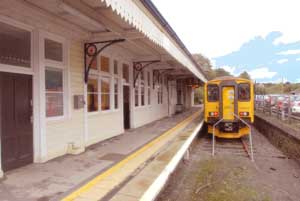
Liskeard
terminus of the Looe Valley Line |
|
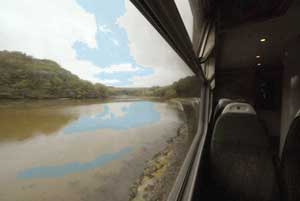
The view through
the train window
|
Further reading
Below are links to web sites providing more in-depth information
about the railway and places of interest along the way.
Great Western
Railway (GWR)
- for information about train times.
Looe Valley Line Day Ranger - The Looe Valley Line Day
Ranger rail pass gives you one-day unlimited rail travel on the
Looe Valley Line from Liskeard to Looe in Cornwall. |
|
Great Scenic Railways - Devon & Cornwall
- The journey to
Looe is full of beautiful views out of the train window. The
wooded valley teeming with wildlife opens up to glorious estuary
views as the river meets the sea.
Visit
Looe - for more information about Looe and the surrounding
area.
Scenic Rail Britain - Take a journey though a picturesque
wooden valley and watch the scenery change as you emerge next to
the scenic East Looe River on your way to the fishing town of
Looe.
Looe Valley Line Rail Ale Trail - A self-guided tour of the
scenic Looe Valley Line, stopping off at pubs along the way to
enjoy locally brewed ales and excellent food.
...and, for a bit of everything ...
Wikipedia - the line's history, heritage, the route and more. |
|
And
if you enjoy holidays with a railway theme, have a look at our
... |
|
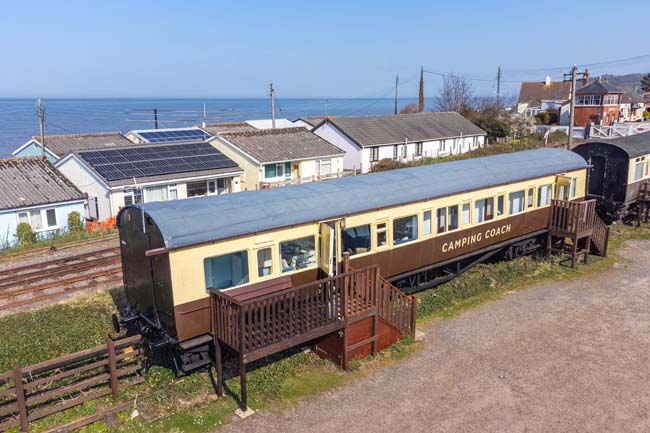 Camping
Coach at Blue Anchor,
on the West Somerset Railway - the country's
longest heritage railway!
Visit
www.britishrailholidays.co.uk
to find out about this wonderful
self-catering holiday location - next to
a working steam railway! |
|
...and at the other end of
the country... |
|
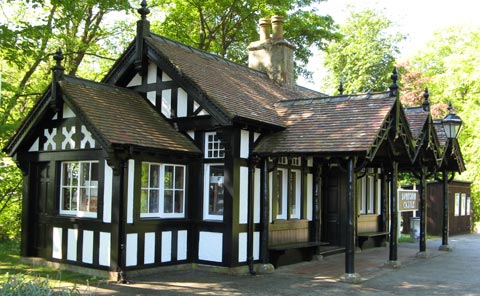
Dunrobin
Station
Between Inverness and
John o'Groats, in the east of Scotland, there is a stunning,
fairy tale castle called Dunrobin. This is the home of the Dukes
of Sutherland.
In
the 1860s, when the railways arrived in that part of the
country, the Duke built his own station and railway line to
connect the castle with the rest of the growing rail network.
So
if you go to the north-east of Scotland, and you visit Dunrobin
Castle and its magnificent gardens, then round off your visit by
going to the station building. As well as being a wonderful
building, it houses a fascinating collection of railway and
local memorabilia.
For
lots more information about the line, the castle station, the
Duke's locomotives and their histories,
CLICK HERE to visit our
web site for DUNROBIN STATION
|
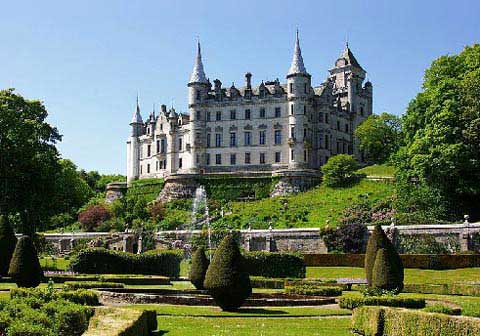
Dunrobin Castle and
Dunrobim Station
 |